Best practices, guides and manuals
In-depth information, often include practical tools such as checklists, step-by-step procedures, and other how-to information.
Guidelines for the Handling of Naturally Occurring Radioactive Materials in Western Canada
RAD001
***This resource is current to August 1995.
For information on the latest OHS requirements, visit OHS website.***
Guidelines for detection, classification, handling, transportation and waste management of naturally occurring radioactive materials (NORM). Developed by the Western Canadian NORM Committee.
PUBLISHED: August 1995
For information on the latest OHS requirements, visit OHS website.***
Guidelines for detection, classification, handling, transportation and waste management of naturally occurring radioactive materials (NORM). Developed by the Western Canadian NORM Committee.
PUBLISHED: August 1995
Guide to OHS: Workers
LI008
Introduces OHS legislation with a focus on what workers need to do to comply with the law. Size 5.5" x 8.5".
For the most current version of this publication, please download the PDF below. You may also order an earlier version of this publication in print format, using the “Order Resource” button below.
UPDATED: October 2024
For the most current version of this publication, please download the PDF below. You may also order an earlier version of this publication in print format, using the “Order Resource” button below.
UPDATED: October 2024
Guide to OHS: Supervisors
LI010
Introduces OHS legislation with a focus on what supervisors need to do to comply with the law. Size 5.5" x 8.5".
For the most current version of this publication, please download the PDF below. You may also order an earlier version of this publication in print format, using the “Order Resource” button below.
UPDATED: October 2024
For the most current version of this publication, please download the PDF below. You may also order an earlier version of this publication in print format, using the “Order Resource” button below.
UPDATED: October 2024

Guide to OHS: Employers
LI009
Introduces OHS legislation with a focus on what employers need to do to comply with the law. Size 5.5" x 8.5".
For the most current version of this publication, please download the PDF below. You may also order an earlier version of this publication in print format, using the “Order Resource” button below.
UPDATED: October 2024
For the most current version of this publication, please download the PDF below. You may also order an earlier version of this publication in print format, using the “Order Resource” button below.
UPDATED: October 2024
Fuel and convenience store employer guide: violence and harassment prevention plan
BP031
Information to help fuel and convenience store employers develop a violence and harassment prevention plan as required in Part 27 of the OHS Code. Includes an overview of all required elements in the plan but focuses on the additional requirements for retail fuelling outlets and convenience stores.
UPDATED: March 2025
UPDATED: March 2025
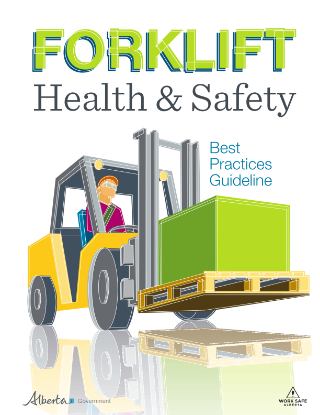
Forklift Health & Safety Best Practices Guideline
BP015
***This resource is current to September 2014.
For information on the latest OHS requirements, visit OHS website.***
Best practices handbook to help employers fulfill their obligation to protect the health and safety of workers who operate or work around forklifts.
PUBLISHED: September 2014
For information on the latest OHS requirements, visit OHS website.***
Best practices handbook to help employers fulfill their obligation to protect the health and safety of workers who operate or work around forklifts.
PUBLISHED: September 2014
Emergency response planning: an occupational health and safety tool kit
BP040
This kit gives employers information about some key occupational health and safety requirements related to emergency response planning. The kit also provides a step-by-step approach to planning that employers can customize to their own work site. Size 8.5" x 11".
UPDATED: September 2025
UPDATED: September 2025
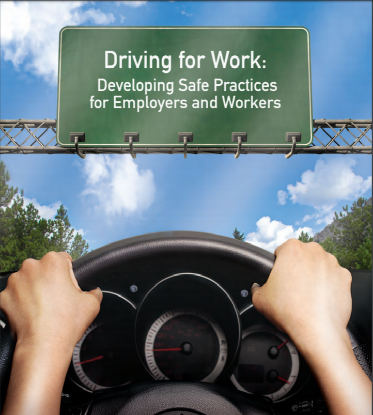
Driving for Work: Developing Safe Practices for Employers and Workers
BP014
***This resource is current to October 2010.
For information on the latest OHS requirements, visit OHS website.***
Information on legal obligations, setting up a safe driving program and investigating incidents.
PUBLISHED: October 2010
For information on the latest OHS requirements, visit OHS website.***
Information on legal obligations, setting up a safe driving program and investigating incidents.
PUBLISHED: October 2010
Course Guidelines: Occupational Health and Safety for the Asbestos Worker
CG001
Summarizes the course content, worker re-certification and administrative procedure requirements for agencies approved to deliver the “Occupational Health and Safety for the Asbestos Worker” course.
UPDATED: April 2021
UPDATED: April 2021
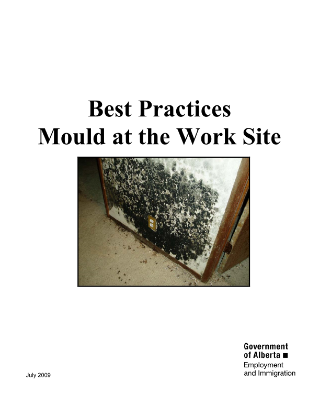
Best Practices: Mould at the Work Site
BH019
***This resource is current to July 2009. For information on the latest OHS requirements, visit OHS website.***
Basic information on mould, health hazards, mitigation, requirements for worker protection, safe work procedures, inspection criteria and applicable legislation.
PUBLISHED: July 2009
Basic information on mould, health hazards, mitigation, requirements for worker protection, safe work procedures, inspection criteria and applicable legislation.
PUBLISHED: July 2009

Best Practices on Conveyor Safety
BP008
***This resource is current to January 2003.
For information on the latest OHS requirements, visit OHS website.***
Best practices handbook that gives an overview of mechanical hazards associated with conveyors, with information about hazard assessment and reduction. Size 8.5" x 11".
PUBLISHED: January 2003
For information on the latest OHS requirements, visit OHS website.***
Best practices handbook that gives an overview of mechanical hazards associated with conveyors, with information about hazard assessment and reduction. Size 8.5" x 11".
PUBLISHED: January 2003
Best Practices Guidelines for Occupational Health and Safety in the Healthcare Industry. Volume 5: Best Practices for the Assessment and Control of Psychological Hazards
BP013
***This resource is current to May 2011.
For information on the latest OHS requirements, visit OHS website.***
A review of best practices for identifying and controlling work-related psychological stressors. Volume 5 of 5 in a series of best practice handbooks for the healthcare industry.
PUBLISHED: May 2011
For information on the latest OHS requirements, visit OHS website.***
A review of best practices for identifying and controlling work-related psychological stressors. Volume 5 of 5 in a series of best practice handbooks for the healthcare industry.
PUBLISHED: May 2011
Best Practices Guidelines for Occupational Health and Safety in the Healthcare Industry. Volume 4: Best Practices for the Assessment and Control of Physical Hazards
BP012
***This resource is current to May 2011.
For information on the latest OHS requirements, visit OHS website.***
Addresses key physical hazards that exist in the healthcare work environment. A companion to the No Unsafe Lift Workbook which addresses patient handling. Volume 4 of 5 in a series of best practice handbooks for the healthcare industry.
PUBLISHED: May, 2011
For information on the latest OHS requirements, visit OHS website.***
Addresses key physical hazards that exist in the healthcare work environment. A companion to the No Unsafe Lift Workbook which addresses patient handling. Volume 4 of 5 in a series of best practice handbooks for the healthcare industry.
PUBLISHED: May, 2011
Best Practices Guidelines for Occupational Health and Safety in the Healthcare Industry. Volume 3: Best Practices for the Assessment and Control of Chemical Hazards
BP011
***This resource is current to May 2011.
For information on the latest OHS requirements, visit OHS website.***
A review of best practices for controlling exposure to chemical hazards in healthcare. Volume 3 of 5 in a series of best practice handbooks for the healthcare industry.
PUBLISHED: May 2011
For information on the latest OHS requirements, visit OHS website.***
A review of best practices for controlling exposure to chemical hazards in healthcare. Volume 3 of 5 in a series of best practice handbooks for the healthcare industry.
PUBLISHED: May 2011
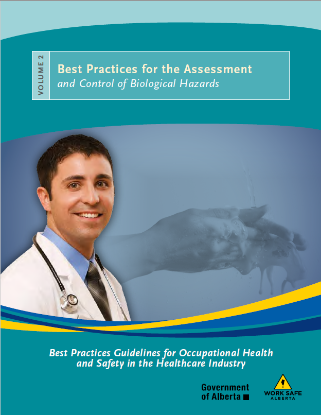
Best Practices Guidelines for Occupational Health and Safety in the Healthcare Industry. Volume 2: Best Practices for the Assessment and Control of Biological Hazards
BP010
***This resource is current to May 2011.
For information on the latest OHS requirements, visit OHS website.***
Information to assist with identifying, assessing and controlling biological hazards in healthcare workplaces. Volume 2 of 5 in a series of best practice handbooks for the healthcare industry.
PUBLISHED: May 2011
For information on the latest OHS requirements, visit OHS website.***
Information to assist with identifying, assessing and controlling biological hazards in healthcare workplaces. Volume 2 of 5 in a series of best practice handbooks for the healthcare industry.
PUBLISHED: May 2011